
- How Traffic Actually Works: Pragmatic Chaos, Not Anarchy
- E-Bikes: 300 Million Reasons You Need to Pay Attention
- Legal Framework: What You Actually Need to Drive or Ride
- Practical Safety Tips by Road User Type
- Case Study: Hangzhou’s Helmet Regulation Success
- What This Means for First-Time Visitors
- FAQ

Foreign drivers lose their nerve at Chinese intersections because nobody taught them the real rules. Traffic lights are suggestions. E-bikes materialize from nowhere. Pedestrians cross without looking. If you rely on what worked back home, you’ll freeze up or cause an accident.
This guide covers what actually happens on Chinese roads—the “biggest goes first” mentality, why e-bikes ride wherever they want, and how to drive, walk, or cycle without constant panic.
How Traffic Actually Works: Pragmatic Chaos, Not Anarchy

Chinese traffic runs on negotiation, not blind rule-following. Larger, faster vehicles take priority. A bus will edge into your lane; you yield. A car turning right won’t stop for you at a crosswalk; you wait or risk getting clipped.
Speed limits exist but flex based on flow. Horns aren’t angry—they’re constant communication, though you must be mindful of no-honking zones. A tap means “I’m here.” A long blast means “move.” Silence means the driver didn’t see you, which is worse.
Minor rule-bending keeps things moving. Delivery riders run reds during gaps. Taxis stop mid-lane to pick up fares. Pedestrians jaywalk into bike lanes without a glance. Everyone expects everyone else to adapt in real time.
Pedestrians: You Have No Automatic Right of Way
Don’t assume cars will stop. Make eye contact with drivers before stepping into the street. If they’re looking at their phone or accelerating, they won’t yield.
Crossing in groups helps—you’re harder to ignore. Solo pedestrians get squeezed by right-turning vehicles that treat reds as optional. A 2019 WHO report noted that e-bike riders accounted for 13.8% of road traffic deaths and 17.4% of injuries, with many collisions involving pedestrians caught off-guard.
Electric scooters approach silently. On sidewalks, hug the building-side edge because e-bikes will zoom past you from behind without warning.
Regional Differences: Beijing vs. Shenzhen
Beijing and Shanghai enforce traffic rules more strictly due to their visibility as national showcases. You’ll see dedicated bus lanes, fenced bike paths, and occasional police checkpoints for helmets.
Shenzhen and Guangzhou have denser e-bike populations and looser enforcement. Shenzhen has 5.5 million registered e-bikes across 1,997 square kilometers—2,754 per square kilometer compared to Beijing’s 305, according to China Daily. That density means constant lane-mixing. Delivery riders weave through cars, sidewalks, and bike lanes interchangeably. Expect chaos at intersections during morning and evening peaks.
In Guangzhou, e-bikes frequently ride against traffic in bike lanes—a head-on risk that doesn’t happen as often in Beijing’s wider, barrier-separated lanes.
E-Bikes: 300 Million Reasons You Need to Pay Attention
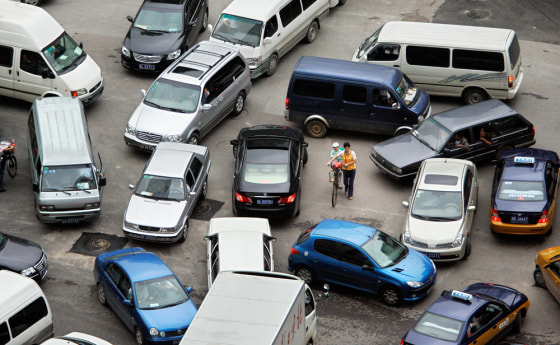
China has approximately 300 million e-bikes, and they’re everywhere—bike lanes, car lanes, sidewalks, even highway on-ramps occasionally. Legally, they’re capped at 25 km/h and classified as non-motorized vehicles. In reality, many are modified to hit 60 km/h, and riders treat lanes as optional.
From 2013-2017, e-bikes caused over 56,000 crashes and 8,000 fatalities nationwide. Between 2007-2022, e-bike accidents rose 3.5 times while overall road casualties fell 34.5%, reaching 13.8% of 3.2 million total casualties in 2022. Head injuries caused 75% of e-bike rider deaths in 2019.
Where Accidents Happen Most
81% of Shenzhen’s e-bike accidents occurred in mixed motorized lanes last year, not in bike lanes. This happens because non-motorized lanes are either absent, too narrow, or blocked by parked cars and street vendors. Riders spill into car traffic, then dart back to sidewalks when it’s convenient.
Migrant workers—often delivery riders—are overrepresented in accident stats. They ride longer hours, take more risks to meet deadlines, and frequently lack helmets. Urban centers and suburban fringes see the highest crash rates due to mixed infrastructure and volume.
Common Violations You’ll See Daily
E-bike riders routinely:
- Ride in motorized lanes when bike lanes exist
- Proceed through red lights during traffic gaps
- Weave between stopped cars at intersections
- Ride on sidewalks, scattering pedestrians
- Carry passengers (illegal in many cities)
- Ride the wrong way in bike lanes
Shenzhen police handled 1.4 million e-bike infractions from January-July 2024, up 10.4% year-over-year. That’s enforcement activity, not actual violation rates—most infractions go unchecked.
Lu Jinlong, Vice Chairman of the China Bicycle Association, told Sixth Tone, “E-bikes themselves don’t make trouble. Accidents happen because riders break traffic rules.” The culture tolerates these violations because banning e-bikes would force people into cars, worsening congestion and pollution.
Legal Framework: What You Actually Need to Drive or Ride
For Drivers
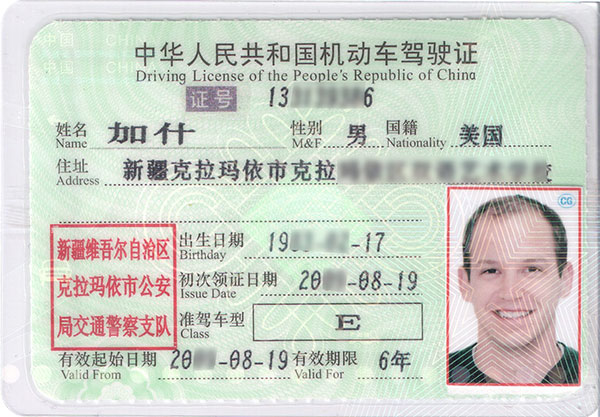
International Driving Permits (IDPs) and foreign licenses don’t work in mainland China. You need a Chinese temporary permit or converted license.
- Short-term visitors: Get a Chinese temporary driver’s license. Some services offer same-day issuance without a theory exam if you hold a valid foreign license. You’ll need your passport, visa, foreign license, translation, and a health certificate.
- Long-term residents: Convert your foreign license by passing the Subject 1 theory exam (100 questions, Chinese traffic law, 90% to pass). This typically takes 5 days if you use a licensed service. You’ll surrender your foreign license during the process.
China relies on a 12-point driving license system. Start with 12 points; violations deduct points. Run out, and your license suspends until you retake exams. Foreigners face the same fines, point deductions, and potential detention as locals for serious infractions.
For E-Bike Riders
E-bikes must be registered in most cities. Riders need to:
- Wear helmets (mandatory in cities like Hangzhou, Nanjing, Shenzhen; fines for non-compliance)
- Use bike lanes or the rightmost vehicle lane if no bike lane exists
- Obey traffic signals
- Avoid sidewalks unless specifically marked for bikes
Licensing isn’t required for standard e-bikes under 25 km/h, but faster models may trigger moped classification, requiring a license. Enforcement varies—Hangzhou cracked down hard in 2020, while smaller cities barely check.
Liu Daizong of the World Resources Institute China Sustainable Transport told China Dialogue, “Electric bicycles themselves aren’t evil… [Categorise] according to maximum speed, with driving licences needed to ride faster categories; better allocation of priority on the roads; and strict enforcement of traffic rules.”
Practical Safety Tips by Road User Type

For Pedestrians
- Never assume cars will stop at crosswalks. Confirm eye contact.
- Cross in groups when possible—you’re more visible.
- On sidewalks, stay close to buildings. E-bikes use sidewalks as passing lanes.
- Scan behind you before stepping left or right; silent e-bikes approach fast.
- Avoid looking at your phone while walking near intersections.
Use designated crosswalks, but know that right-turning vehicles often ignore pedestrians even at greens. Wait for a gap or cross with a crowd.
For Drivers
- Drive defensively. Assume e-bikes will appear in your blind spots.
- Use your horn proactively—tap it before lane changes, turns, or passing pedestrians.
- Anticipate that right-turning cars and e-bikes ignore red lights. Yield extra space at intersections.
- Stick to main roads with physical barriers separating bike lanes when possible.
- Treat e-bikes as faster threats than pedal bikes due to modifications.
Google Maps won’t load in China. Download Gaode (Amap) or Baidu Maps before arrival. Both have English interfaces and work without VPN. Follow the Chinese road signs and icons even if you can’t read Chinese characters.
For payments, you’ll need WeChat Pay or Alipay. Parking meters, tolls, and gas stations rarely take cash or foreign cards. Link an international card to these apps before you arrive, or load funds at convenience stores.
Ride-hailing via DiDi (China’s Uber) is often safer and cheaper than renting a car for short trips. You’ll need WeChat Pay or Alipay linked to book rides.
For E-Bike Riders
- Wear a helmet. Police checkpoints fine non-compliance on the spot.
- Stay in bike lanes. If none exist, ride in the rightmost lane, not on sidewalks.
- Use your horn or bell constantly—pedestrians won’t look before stepping into bike lanes.
- Don’t ride against traffic in bike lanes, even if you see locals doing it.
- At intersections, wait for greens. Running reds during gaps works until it doesn’t.
Morning rush (7-9 a.m.) sees the safest behavior, according to Hangzhou observational data, because heavier traffic forces caution. Weekends and evenings see more violations—red-light running jumped from 4.16% on weekdays to 4.92% on weekends.
Case Study: Hangzhou’s Helmet Regulation Success

In July 2020, Hangzhou implemented the “Regulations of Zhejiang Province on the Administration of Electric Bicycles.” A study tracking 99,407 e-bike riders across 16 intersections found helmet use jumped to 92.81% after enforcement, compared to 9.0% in Suzhou before similar policies.
83% of riders became aware of the regulations, and 81.8% believed safety improved. Rural Jiande County achieved 94.20% correct helmet use versus 71.06% in urban Shangcheng District by combining enforcement with a “civilized city” campaign.
The study also found that dedicated non-motorized vehicle lanes reduced passenger-carrying violations significantly (odds ratio 11.43), proving infrastructure matters more than rules alone.
What This Means for First-Time Visitors
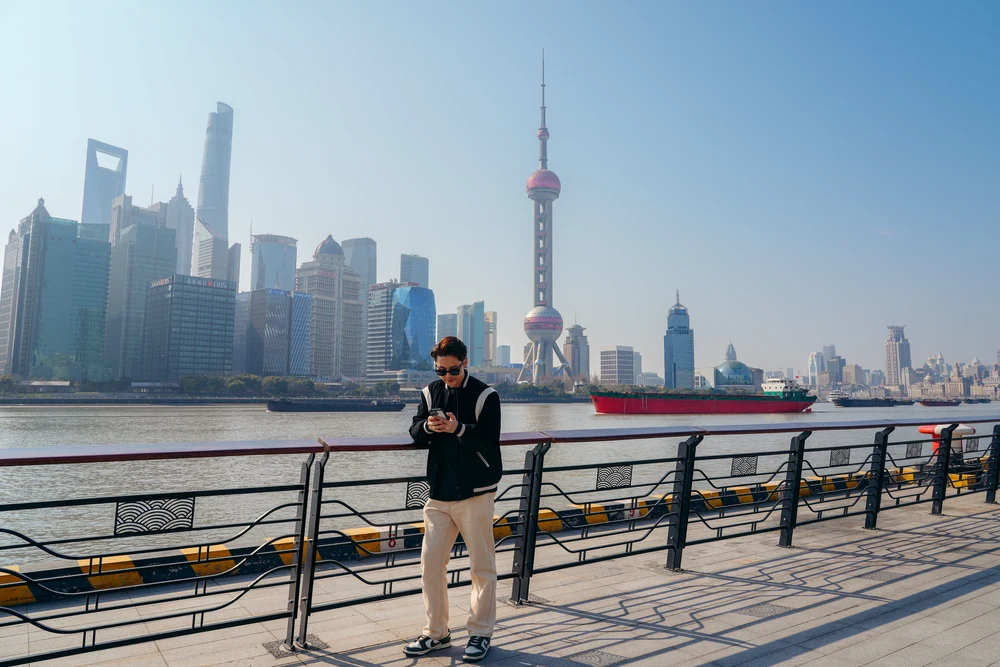
If you’re arriving for a business trip or short stay:
- Don’t rent a car unless you have a Chinese temporary permit. Use DiDi instead.
- Download Amap and link WeChat Pay to an international card before landing.
- Walk defensively—assume no one will yield.
- If you must drive, hire a local driver for the first few days to observe behavior.
For long-term residents:
- Convert your license within the first month. Driving illegally risks fines, detention, and insurance issues.
- Enroll in a local defensive driving course if available. Some expat communities offer informal workshops.
- Learn common Mandarin traffic terms: 红灯 (hóng dēng, red light), 绿灯 (lǜ dēng, green light), 停 (tíng, stop).
- Join expat forums like r/China or city-specific WeChat groups to ask about current enforcement trends.
FAQ
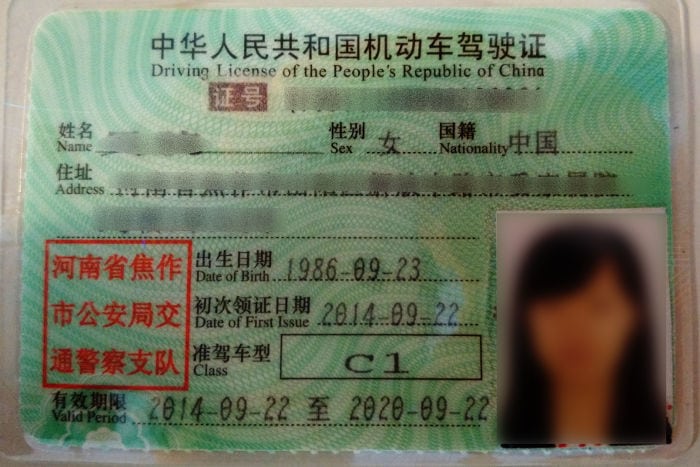
Is an International Driving Permit valid in mainland China?
No. You need a Chinese temporary permit or converted license. IDPs don’t work here. Processing takes 1-5 days depending on the service.
What causes most e-bike accidents?
Collisions with larger vehicles in mixed lanes, riders ignoring signals, riding against traffic, and weaving between cars. WHO data shows head injuries cause 75% of e-bike fatalities, mostly due to lack of helmets.
How do pedestrians stay safe crossing streets?
Don’t assume drivers will stop. Make eye contact, cross in groups, use crosswalks, and watch for right-turning vehicles running reds. Scan for silent e-bikes approaching from behind.
Are helmets mandatory for e-bike riders?
Yes, in most major cities (Hangzhou, Shenzhen, Nanjing). Fines range from 20-50 RMB. Compliance is high in strictly enforced areas, lower in suburbs.
How do I pay for parking or tolls?
WeChat Pay or Alipay. Cash and foreign cards rarely work. Link your card to these apps before arrival or load funds at 7-Eleven or Family Mart.
What are penalties for traffic violations as a foreigner?
Same as locals: fines (200-2,000 RMB), point deductions, or license suspension. Committing a serious traffic violation, such as DUI or causing injury, can lead to detention and deportation. Check China’s Ministry of Public Security for penalty schedules.
If you’re planning to drive legally in China, you’ll need proper licensing. The Chinese Temporary Driver’s License Service offers same-day issuance for short-term visitors without exams. For extended stays, the China Driver’s License Conversion Service lets eligible foreign license holders convert by passing only the Subject 1 theory exam, typically within 5 days. Visit chinadriverslicense.com for English-language guidance and compliant processing.
One practical maintenance tip: Keep a printed copy of your Chinese license, passport, and visa in your glove box. Traffic police at checkpoints often don’t accept phone photos, and digital copies fail when your phone dies or has no signal.
Sources:
- China Daily: https://www.chinadailyhk.com/hk/article/614766
- UNECE Road Safety Report: https://unece.org/sustainable-development/press/un-special-envoy-road-safety-visits-china-advocate-actions-addressing
- WHO China E-Bike Safety: https://www.who.int/china/activities/protecting-chinese-e-bike-users-from-road-injuries-and-deaths
- PMC E-Bike Accident Study: https://pmc.ncbi.nlm.nih.gov/articles/PMC11058882/
- Hangzhou Helmet Regulation Study: https://pmc.ncbi.nlm.nih.gov/articles/PMC10907736/
- China Dialogue E-Bike Policy: https://dialogue.earth/en/pollution/9036-chinese-cities-crack-down-on-electric-bikes/
- Sixth Tone E-Bike Culture: https://www.sixthtone.com/news/787/chinas-relationship-with-e-bikes-its-complicated
- Academic E-Bike Safety Analysis: https://academic.oup.com/tse/article/4/3/tdac011/6675677
- Nanjing E-Bike Adoption Study: https://orca.cardiff.ac.uk/id/eprint/102852/1/pdfNanjingeBikesPaper250916cleanORCA.pdf