
- The Horn is Not Optional
- Pedestrians: You Have No Right of Way
- Getting a Legal License: No, Your IDP Doesn’t Work
- Fines and the Demerit Point System
- E-Bikes: The Silent Threat
- Practical Tools: Apps and Payments
- Defensive Driving is Not Optional
- Regional Differences
- What to Do If Stopped by Police
- Handling a Minor Accident
- Quick Checklist for Foreigners
- Frequently Asked Questions

China’s roads operate on a different logic than Western countries. Forget rigid lane discipline. Here, traffic flows through constant negotiation, where size often determines right of way and the horn is a survival tool, not a last resort. This creates serious friction for foreigners accustomed to predictable, rule-based systems.
The Horn is Not Optional

In the US or Canada, honking is for emergencies. In China, it’s how drivers talk to each other. According to researchers Yongqi Dong et al. at Delft University of Technology, “In the United States and Canada…honking is primarily reserved for emergency situations or to alert of imminent danger. Conversely, in countries such as China…honking serves multiple communication purposes, including expressing frustration or conveying greetings.”
Peter Hessler, who spent years driving in China, described it this way: “People honk constantly…In a sense honking is as complicated as the language. Spoken Chinese is tonal…Similarly, a Chinese horn is capable of at least ten distinct meanings. A solid hooooonnnnkkk is intended to attract attention. A double sound — hooooonnkkk hoooonnnnkk — indicates irritation.”
What this means for you:
- Short, sharp honk = “I’m here, don’t merge into me.”
- Double honk = “Move” or “You’re too slow.”
- Prolonged blast = Actual anger or emergency.
If you drive timidly and don’t honk, you will get sideswiped. Drivers merge without checking mirrors. Pedestrians step out without looking. E-bikes cut across lanes silently. Your horn is your shield.
But honk wrong and you pay. Beijing and Shenzhen use acoustic cameras that detect illegal honking with 92-95% accuracy, capturing your plate and issuing fines around ¥100 (roughly $16 USD). These detectors sit near schools, hospitals, and residential zones. Look for “No Honking” signs—a red circle with a trumpet crossed out. Ignore them and you’re done.
How to honk defensively without getting fined:
- Use quick taps for presence, not long blasts.
- Honk before passing, especially near bikes or pedestrians.
- Never honk in marked no-honking zones or residential streets at night.
- Don’t honk back in anger—it’s pointless and risks a fine.
One expat reported honking four times per minute in China, versus almost never in the US. Another adapted by honking back aggressively on a motorbike and yelling at cabs. You don’t need to go that far, but you do need to honk.
Pedestrians: You Have No Right of Way

Crosswalks and green lights mean nothing if a car or scooter decides to keep moving. The official rule dictates pedestrian priority, but the real rule is whoever commits first, goes first.
What works:
- Make eye contact with drivers before stepping out. If they don’t see you, they won’t stop.
- Cross in groups. Drivers are more likely to yield to a cluster of people.
- Time your crossing with natural gaps in traffic, not against the flow.
- Watch for e-bikes. They’re silent, fast, and operate on sidewalks, in crosswalks, wherever. You won’t hear them coming.
E-bikes are everywhere. They weave through pedestrian zones, blow through red lights, and ride on sidewalks. Guangzhou reported significant increases in e-bike accidents. Common causes: riding in motorized lanes, ignoring signals, and operating on sidewalks. They create chaos for pedestrians and drivers alike.
China recorded 60,028 traffic deaths in 2023 despite a vehicle fleet of 440 million. Major accidents (3+ deaths) dropped 12% from 2019 to 436, but earlier data showed around 260,000 annual deaths, many of them pedestrians and cyclists.
Don’t assume you’re safe because you’re in the crosswalk. You’re not.
Getting a Legal License: No, Your IDP Doesn’t Work
International Driver’s Permits (IDPs) are invalid in mainland China. You need a Chinese driver’s license. There are three pathways depending on your situation.
1. Temporary Chinese Driver’s License (Short-Term Visitors)
Who it’s for: Tourists, business travelers, and those needing a temporary driver’s license for short stays.
What you need:
- Valid foreign driver’s license.
- Official translation and notarization of your license.
- Passport with valid visa.
- Medical exam (arranged through the licensing office or service).
The process:
- No theory test.
- No road test.
- Processing can take as little as 10 minutes, depending on location.
- Valid nationwide for Category C vehicles (small passenger cars) for the duration specified (typically tied to visa validity).
Cost and service:
- Fees vary by city and service provider. Expect ¥200-¥500 for translation and processing if done independently. Premium services offering airport meet-and-assist and expedited processing charge more.
Timeline:
- Same day if documents are ready. Allow 1-2 days if you need translation or notarization done first.
2. Chinese Driver’s License Conversion (Foreign License Holders, Long-Term Stay)
Who it’s for: Expats exploring a driver’s license conversion with a valid foreign license and planning to stay longer.
What you need:
- Valid foreign driver’s license.
- Official translation and notarization.
- Passport and residence permit.
- Medical exam.
- Pass Subject 1 theory exam (100 multiple-choice questions).
The process:
- No road test.
- No driving school enrollment.
- Exam available in English and other languages.
- License valid for 6-10 years nationwide, Category C.
Cost:
- Exam fee: around ¥100-¥200.
- Service fees for exam booking, materials, and assistance: ¥500-¥1,500 depending on provider.
Timeline:
- 1-2 weeks from start to license collection, assuming you pass the exam on first attempt.
Exam details:
- 100 questions, 90 points to pass.
- Topics: traffic laws, road signs, safe driving practices, penalties.
- Study materials provided by official services or available via apps like “Driving Test China.”
3. China Driver’s License Exam Service (No Foreign License)
Who it’s for: Foreigners requiring the full driver’s license exam service without a valid license from their home country.
What you need:
- Passport and valid residence permit.
- Medical exam.
- Pass Subject 1 theory exam only.
The process:
- No road test required.
- License valid for 10 years nationwide, Category C.
Cost:
- Similar to conversion: ¥100-¥200 for exam, ¥500-¥1,500 for full service package.
Timeline:
- 1-2 weeks.
Important:
- Visa eligibility and document pre-review are critical. Some visa types (e.g., tourist L visa) may not qualify for long-term licenses. Check with the local vehicle administration office or a reputable service provider.
Fines and the Demerit Point System

China uses a strict 12-point driving license system. You start with 12 points per year. Violations deduct points. Lose all 12 and your license is suspended until you retake exams.
Common violations and penalties (as of 2024):
- Speeding: ¥200-¥2,000 depending on excess. Average speed cameras are everywhere, including hidden in trees.
- DUI: License revoked, heavy fines, possible detention or jail time. Zero tolerance.
- Mobile phone use while driving: ¥200 fine, 2 points.
- Running a red light: ¥200, 6 points.
- Illegal honking: ¥100-¥200 in restricted zones (Beijing, Shanghai, Shenzhen enforce strictly).
- Driving without a valid Chinese license: Detention, fines, deportation risk.
Enforcement varies by city. Beijing, Shanghai, Guangzhou, and Shenzhen have dense camera networks and stricter monitoring. Smaller cities may be more relaxed, but don’t count on it.
How to avoid fines:
- Obtain the correct license before driving.
- Obey speed limits. Cameras are frequent and well-hidden.
- Never use your phone while driving.
- Don’t drink and drive. Seriously.
- Respect no-honking zones.
- Drive defensively but follow signals.
Beijing’s traffic bureau actively enforces honking bans with acoustic detectors. Other cities are following.
E-Bikes: The Silent Threat

E-bikes are cheap, convenient, and unregulated in many areas. They’re used by students, delivery drivers, migrant workers, and commuters. They’re also dangerous.
Why they’re a problem:
- Operate silently. You won’t hear them until they’re next to you.
- Ignore traffic lights and lane markings.
- Mix with pedestrians on sidewalks and cars in traffic lanes.
- Speed varies widely—some are slow, some hit 40+ km/h.
Accident data from Guangzhou highlights common causes: riding in motorized lanes, running red lights, and operating on sidewalks. Infrastructure hasn’t kept up. Many cities lack dedicated e-bike lanes, forcing them into pedestrian or car zones.
What you need to know:
- Always check for e-bikes before stepping off a curb or out of a car.
- Don’t assume sidewalks are safe—e-bikes use them constantly.
- If you’re driving, watch your mirrors. E-bikes appear suddenly and cut across lanes without warning.
Some cities are discussing licensing or registration for e-bikes. As of now, enforcement is inconsistent.
Practical Tools: Apps and Payments

Navigation:
- Google Maps doesn’t work in China. Download Amap (Gaode 高德地图) or Baidu Maps. Both have English interfaces. Amap is more reliable for real-time traffic and road conditions.
Ride-hailing:
- DiDi Chuxing (滴滴出行) is the dominant app. You’ll need a local SIM card or a working VPN to register and use it smoothly. Link Alipay or WeChat Pay for payment.
Payments:
- Cash is rarely accepted for parking, tolls, or services. You need WeChat Pay or Alipay. Set these up before you arrive. Some versions allow foreign credit card linking, but a Chinese bank account makes everything easier.
Parking:
- Street parking requires WeChat Pay or Alipay. Look for signs with QR codes. Scan, enter your plate number, pay. No cash, no Visa.
Defensive Driving is Not Optional

Chinese traffic operates on assumptions that differ from Western norms. Drivers don’t always check mirrors. Pedestrians don’t always look. E-bikes do whatever they want.
What works:
- Scan constantly. Don’t fixate on the car ahead. Watch sides, check mirrors, anticipate merges.
- Assume others won’t signal. They probably won’t.
- Yield to size. Buses and trucks often force their way. Let them.
- Use your horn proactively, not reactively. Tap it before passing or when approaching a blind corner.
- Don’t tailgate. Sudden stops are common.
- Expect pedestrians and e-bikes to appear anywhere, anytime.
One expat noted that blending US rule-following with Chinese assumptions—”assume others won’t follow rules”—made driving safer.
Regional Differences

Traffic enforcement and culture vary by city.
Beijing:
- Strict enforcement. Cameras everywhere. No-honking zones enforced with acoustic detectors.
- Heavy traffic, especially during rush hours.
- Road conditions generally good.
Shanghai:
- Similar to Beijing. Dense camera network. Inner ring has honking restrictions.
- E-bike traffic intense.
Guangzhou and Shenzhen:
- High accident rates involving e-bikes.
- Rapid development means infrastructure sometimes lags.
- Enforcement increasing, especially for honking and speeding.
Smaller cities:
- Enforcement less consistent.
- Road conditions vary.
- Traffic can be chaotic, with less adherence to signals.
Check local regulations if you’re driving outside major cities. Rules on honking, speed limits, and e-bike use may differ.
What to Do If Stopped by Police
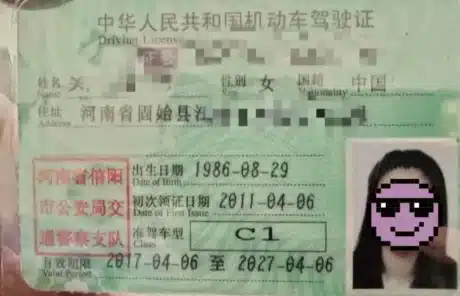
If police pull you over:
- Stay calm. Be polite.
- Have your passport, Chinese driver’s license, and vehicle registration ready.
- If you don’t speak Chinese, use a translation app. Police in major cities may have access to interpreters, but don’t count on it.
- If you’re fined, ask for a receipt (罚单 fádan) with details. You can pay fines at banks or via WeChat/Alipay.
- Driving without a valid Chinese license can result in detention and deportation proceedings. Don’t risk it.
Handling a Minor Accident
If you’re involved in a minor accident (no injuries, minor damage):
- Move vehicles to the side of the road if possible to avoid blocking traffic.
- Exchange contact and insurance information with the other driver.
- Take photos of vehicle positions, damage, and license plates.
- Call your insurance company. Most policies require immediate notification.
- If there’s a dispute, call 122 (traffic police hotline). They will come to the scene and issue a report.
- Do not admit fault verbally or in writing unless you’re certain and your insurance advises it.
For accidents involving injuries or significant damage, do not move vehicles. Call 122 and 120 (ambulance) immediately.
Quick Checklist for Foreigners
- License: Obtain a valid Chinese temporary or full license before driving. IDP does not work.
- Apps: Download Amap or Baidu Maps. Set up WeChat Pay and Alipay.
- Horn: Use short taps for presence. Avoid long blasts and no-honking zones.
- Speed: Obey limits. Cameras are frequent and hidden.
- Phone: Never use while driving.
- DUI: Zero tolerance. Don’t drink and drive.
- E-bikes: Watch for them everywhere. They’re silent and unpredictable.
- Pedestrians: Make eye contact before crossing. Don’t assume right of way.
- Parking: Pay via WeChat Pay or Alipay. No cash or Visa accepted.
- Accidents: Call 122 for police, 120 for ambulance. Document everything.
Keep your passport, license, and insurance documents in the car at all times.
Frequently Asked Questions
Can I use my international driver’s license to drive in China?
No. An International Driver’s License (IDL) or International Driving Permit (IDP) is not valid in mainland China. You must obtain a Chinese driver’s license. Options include a Temporary Chinese Driver’s License for short stays (no exam required) or a converted/exam-based Chinese Driver’s License for longer stays (requires passing Subject 1 theory test).
Why do Chinese drivers honk so much?
Honking in China is a communication tool, not an emergency signal. Drivers use it to indicate presence, warn before passing, or alert pedestrians and other vehicles. According to research from Delft University, “in countries such as China…honking serves multiple communication purposes, including expressing frustration or conveying greetings,” unlike the US where it’s reserved for emergencies. If you don’t honk, other drivers assume you’re not there.
What should pedestrians do to cross roads safely in China?
Never assume you have right of way, even at marked crosswalks or green lights. Make direct eye contact with drivers and e-bike riders before stepping out. Cross in groups when possible—drivers are more likely to stop for clusters of people. Time crossings with natural gaps in traffic. Always watch for silent e-bikes, which frequently operate on sidewalks and in crosswalks without warning.
How can foreigners avoid traffic fines in China?
Obtain a valid Chinese driver’s license before driving. Obey speed limits strictly—cameras are everywhere, including hidden in trees. Never use your phone while driving. Don’t drink and drive (DUI penalties are severe: license revocation, fines, possible jail time). Respect “no-honking” zones, especially near schools, hospitals, and residential areas. Beijing and Shenzhen use acoustic cameras to catch illegal honking, issuing fines around ¥100-¥200. Drive defensively and follow signals.
Are e-bikes legal to ride on roads and sidewalks?
Legality varies by city. E-bikes are common but often operate in violation of local rules. Riding on sidewalks is generally illegal but widely ignored. Operating in motorized lanes is risky and contributes to accidents. Guangzhou data shows common violations include riding in motorized lanes, running red lights, and using sidewalks. Some cities are considering or implementing licensing and registration requirements. Enforcement is inconsistent. As a pedestrian or driver, assume e-bikes will appear anywhere.
What are the penalties for drinking and driving in China?
Driving under the influence (DUI) in China results in license revocation, heavy fines, administrative detention, and possible criminal charges if injury or death occurs. Blood alcohol limits are strict (0.02% for any alcohol, 0.08% for drunk driving). Foreigners face the same penalties as locals, including potential deportation. Zero tolerance is enforced. Never drink and drive.
How do I pay for public transport and parking in major Chinese cities?
Public transport and parking primarily use Alipay and WeChat Pay. Cash and foreign credit cards (Visa, Mastercard) are rarely accepted. Set up these apps before arriving or immediately upon arrival. Link a Chinese bank account or a foreign card if supported. For parking, scan QR codes on street signs, enter your license plate number, and pay via the app. Ride-hailing apps like DiDi Chuxing also require mobile payment integration. Without these apps, transportation becomes difficult.
What should I do if I’m involved in a traffic accident in China?
For minor accidents (no injuries, minor damage): Move vehicles to the roadside if safe, exchange contact and insurance details, photograph vehicle positions and damage, call your insurance company, and notify traffic police at 122 if there’s a dispute. For accidents with injuries or major damage: Do not move vehicles. Call 122 (traffic police) and 120 (ambulance) immediately. Do not admit fault unless you’re certain and your insurance advises it. Obtain a police report for insurance claims. Keep copies of all documents.
How long does it take to get a Chinese driver’s license as a foreigner?
Temporary license (no exam): Same day to 2 days, depending on document readiness (translation, notarization, medical exam). Converted license (with foreign license, Subject 1 exam required): 1-2 weeks from start to license collection, assuming you pass the exam on the first attempt. Full exam service (no foreign license, Subject 1 exam required): 1-2 weeks. Processing times vary by city and service provider. Beijing and Shanghai tend to be faster. Smaller cities may take longer. Use a reputable service to expedite the process.
Do I need a Chinese SIM card to use navigation and ride-hailing apps?
Not strictly required, but highly recommended. Amap (Gaode) and Baidu Maps work with foreign SIM cards or Wi-Fi, but functionality may be limited. DiDi Chuxing registration and use are smoother with a local number. WeChat Pay and Alipay also work better with Chinese SIM cards for verification. You can get a prepaid SIM card at the airport or convenience stores like 7-Eleven for around ¥50-¥100. China Mobile, China Unicom, and China Telecom are the main providers.