
- Right Turns on Red: When You Can and Can’t
- Pedestrian Priority: The Law vs. Reality
- Other Rules That Will Catch You Off Guard
- How Enforcement Works and What Happens if You Get Stopped
- Case Study: Learning Defensive Driving in China
- Case Study: Navigating Pedestrian Chaos
- Key Differences: China vs. US
- How to Stay Compliant
- FAQ

You need a Chinese driver’s license to drive here legally. If you’ve just arrived, download Amap (Gaode) now—Google Maps doesn’t work. You’ll also need WeChat Pay for tolls and parking because no one takes Visa or cash.
China allows right turns on red, but only sometimes. Pedestrians legally have priority, but they don’t always act like it. Other drivers will merge into your lane without signaling. This guide explains what the law says, what actually happens on the road, and how to avoid getting hit, fined, or confused.
Right Turns on Red: When You Can and Can’t

You can turn right on a circular red light after a complete stop, as long as you yield to pedestrians and vehicles. This is the same basic rule as most US states. The problem: many intersections use a red arrow instead of a circular light, and a red arrow means stop—no turning, period.
Watch the signal type. If it’s a round red light and there’s no “No Right Turn” sign, you can go after stopping. If it’s a red arrow pointing right, you wait. Foreign drivers mess this up constantly because they assume all red lights work the same way.
China’s Road Traffic Safety Law doesn’t explicitly spell out “right turn on red” in one clear sentence, but Article 38 states that vehicles must follow traffic signals, and local enforcement across major cities permits right turns on circular reds unless otherwise posted. The Ministry of Public Security enforces these rules through traffic police and cameras.
Some cities have ambiguous intersections where the signal type isn’t obvious, or where a green straight-ahead light and a red arrow coexist. If you’re unsure, wait. Cameras catch illegal turns, and fines start at ¥200.
What to do at an unfamiliar intersection:
- Stop completely.
- Check the signal—circular red or arrow?
- Look for posted signs (often in Chinese only; the red circle with a right arrow crossed out means no right turn).
- Yield to all pedestrians and bikes, even if they’re jaywalking.
- If local drivers aren’t turning, don’t turn.
Pedestrian Priority: The Law vs. Reality
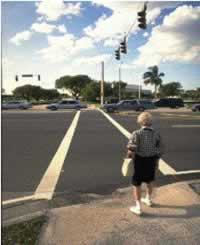
Article 47 of China’s Road Traffic Safety Law requires drivers to slow down at crosswalks and stop if pedestrians are crossing. Pedestrians have legal priority. In practice, enforcement is inconsistent, and many pedestrians don’t trust that cars will stop, so they hesitate or walk without looking.
You’ll encounter two common behaviors:
- The no-look crossing: Pedestrians step into the street without checking for cars, assuming drivers will brake. If you don’t stop, you’re legally at fault.
- Group crossings: Pedestrians gather at the curb and inch forward in a pack, forcing cars to stop. This is especially common at unmarked intersections during rush hour.
Drivers who hit pedestrians at marked crosswalks face fines, points on their license, and potential liability even if the pedestrian was jaywalking. From 2015 to 2018, 3,898 pedestrian deaths occurred at crosswalks nationwide, and enforcement has since increased in major cities like Beijing and Shanghai.
How to handle pedestrians:
- Slow down at every crosswalk, marked or not.
- Assume pedestrians will cross even if they’re not supposed to.
- Stop completely if anyone is in the crosswalk, even if they’re on the far side of the road.
- Don’t honk aggressively—it’s often seen as rude and won’t make them move faster.
Between 2000 and 2008, foreign drivers accounted for 40-50 road fatalities annually in China, with around 200 nonfatal injuries per year. Many of these incidents involved pedestrian collisions at intersections.
Other Rules That Will Catch You Off Guard

Lanes Are Suggestions
Chinese drivers treat lanes as flexible guidelines, not strict boundaries. Expect cars to drift into your lane without signaling, especially during merges. Motorcycles and e-bikes will squeeze between lanes even when there’s no room.
Don’t try to “defend” your lane like you would in the US. Just assume someone will cut in and leave space.
E-Bikes and Scooters Are Everywhere
Electric scooters and bikes move fast, make no noise, and often ignore traffic signals. They’ll weave through stopped cars, ride on sidewalks, and cross against red lights. You won’t hear them coming.
Check your mirrors and blind spots constantly, especially when turning right. E-bikes often approach from behind on your right side, exactly where you’re trying to turn.
Honking Is Communication, Not Aggression
Drivers honk to signal intent, warn pedestrians, or acknowledge other cars. It’s not always angry. A quick beep before merging or passing is normal.
If someone honks at you, don’t take it personally—they’re just letting you know they’re there.
Speed Cameras Are Hidden
Traffic cameras are mounted on poles, bridges, and sometimes hidden in trees. They catch speeding, illegal turns, running red lights, and even failure to yield to pedestrians. Fines are automatic and show up when you renew your license or registration.
You won’t get pulled over for speeding in most cases—you’ll just get a fine in the mail weeks later.
Military Plates Get Special Treatment
Vehicles with military license plates (white plates with red characters) are sometimes exempt from certain traffic rules. Don’t expect them to follow the same rules as civilian drivers.
How Enforcement Works and What Happens if You Get Stopped

China’s traffic police (交警, jiāojǐng) enforce traffic laws through direct stops and an extensive camera network. If you’re pulled over, the officer will ask for your license, registration, and sometimes your passport.
Most officers don’t speak English. If you don’t speak Mandarin, stay calm and polite. You can call your embassy’s consular section for assistance, or use a translation app like Baidu Translate (which works offline).
Common violations for foreign drivers:
- Illegal right turn on red arrow: ¥200 fine, 3 points
- Failure to yield to pedestrians: ¥200 fine, 3 points
- Running a red light: ¥200 fine, 6 points
- Speeding (10-20% over limit): ¥200 fine, 3 points
Points accumulate on your license. If you reach 12 points in one year, your license is suspended and you must retake the written exam.
Cameras issue most fines. You’ll receive a notice by mail or through the traffic police app (12123 app, Chinese only). Pay fines at a bank or through WeChat Pay before your license renewal, or you won’t be able to renew.
If you’re stopped and don’t understand what’s happening, ask to see the violation notice in writing. Traffic police are required to provide documentation. You can dispute fines at the local traffic bureau, but you’ll need a translator.
For official traffic law translations and government resources, check the National People’s Congress English law database. If you’re stopped and need consular help, contact your embassy—most have 24-hour hotlines for citizens in legal trouble.
Case Study: Learning Defensive Driving in China

A foreign driver documented their experience on the Far West China blog after obtaining a Chinese license. Initially, they were nervous: in 2006, China’s road fatality rate was double that of the US, despite having one-fourth the number of licensed vehicles.
The breakthrough came from abandoning Western assumptions about rule-following. Instead of expecting drivers to stop at red lights, they assumed every car would run the light and planned accordingly. Instead of treating lanes as private space, they expected cars to merge without warning.
Specific changes:
- Stopped before every crosswalk, even if no pedestrians were visible.
- Waited for local drivers to move first at ambiguous signals before proceeding.
- Left extra space when merging, assuming someone would cut in.
- Checked mirrors constantly for e-bikes approaching from behind.
The result: the driver became more cautious and ultimately more skilled. They combined Western rule awareness with Chinese defensive assumptions.
Case Study: Navigating Pedestrian Chaos

Another driver documented 14 months of driving in China on the China Griffith blog. They noted that while pedestrians theoretically have priority, most don’t expect cars to stop. When the driver stopped at a crosswalk, pedestrians would stare and wait for the car to go first.
Right turns on red were rarely enforced in their city. The driver would slow down, merge into traffic, and expect pedestrians to stop. This conflicts with the legal requirement to yield, but it reflected observed local practice.
The driver identified two pedestrian crossing strategies:
- No-look approach: Pedestrians cross without making eye contact, forcing drivers to honk or brake.
- Power in numbers: Groups gather and edge into the road until enough people block traffic.
The driver also observed that lanes functioned as suggestions. As many cars as could physically fit would squeeze into a single lane, especially during rush hour.
This experience shows the gap between written law and actual behavior. Foreign drivers need to adapt to both.
How to Stay Compliant
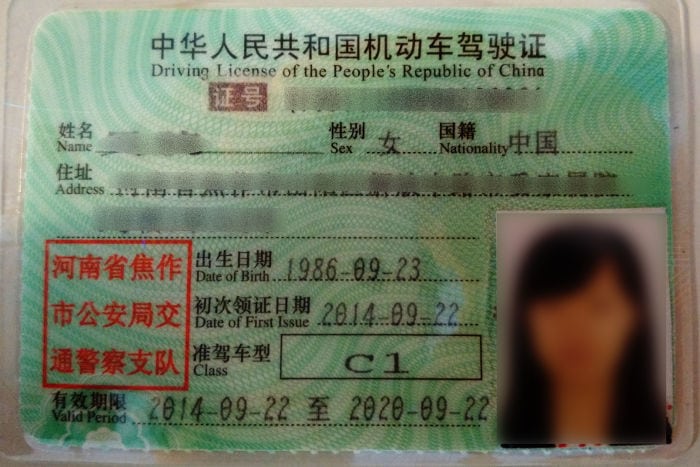
Get a Chinese driver’s license before you drive. Temporary licenses for short-term visitors start at USD 80 and can be issued in as little as 10 minutes, valid nationwide. Foreign nationals with a valid foreign license can convert it for USD 500, requiring only the Subject 1 theory exam, processed within 5 days, valid for 6–10 years.
Steps to stay legal:
- Study the Road Traffic Safety Law (English version available).
- Download Amap (Gaode) for navigation—Google Maps doesn’t work in China.
- Set up WeChat Pay for tolls, parking, and fines.
- Keep your license, registration, and passport in the car at all times.
- Check traffic camera locations using the 12123 app (Chinese only, but icons are intuitive).
- If you can’t read Chinese signs, use a translation app with camera function (Baidu Translate works offline).
If you’re stopped by police and don’t speak Mandarin:
- Stay calm and polite.
- Show your license, registration, and passport.
- Use a translation app or call your embassy’s consular hotline.
- Ask for written documentation of the violation (required by law).
- Don’t sign anything you don’t understand—request a translator.
FAQ

Can you legally turn right on red in China?
Yes, on a circular red light after a complete stop, unless there’s a red arrow or “No Right Turn” sign. Red arrows prohibit all turns.
What should I do when pedestrians are crossing unexpectedly?
Stop. Even if they’re jaywalking, you’re legally required to yield. Hitting a pedestrian puts you at fault.
Are there special traffic rules for foreigners driving in China?
No. Foreign drivers follow the same laws as Chinese nationals. You need a Chinese driver’s license to drive legally.
How strict are Chinese police about pedestrian priority?
Varies by city. Beijing and Shanghai enforce it more strictly. Smaller cities may be more lenient. Cameras catch violations at major intersections.
Do the traffic signals in China differ from my home country?
Signals use red, yellow, and green like most countries. The key difference: red arrows prohibit turns, but circular red lights allow right turns after stopping. Some intersections have countdown timers showing seconds until the light changes.
How can I ensure I am compliant with China’s traffic laws?
Get a valid Chinese license, study the official traffic laws, download Amap for navigation, and set up WeChat Pay. If you can’t read Chinese, use a translation app for signs.
When parking, always check for “No Parking” signs (red circle with a blue background and red X). Enforcement is heavy in city centers, and your car can be towed within 30 minutes. Pay for parking through WeChat or Alipay—cash and Visa don’t work at most meters.